Education
Staking Commissions, Rates, and What Makes GalaxyOne Different

If you've looked into crypto staking, the process of committing your cryptocurrency to help support a blockchain network in exchange for potential rewards, you've probably noticed rates and terminology varying from platform to platform. "7% APR," "6% APY," "5% NRR," and other labels make it difficult to make apples-to-apples comparisons.
Part of the problem is that there's no industry-wide standard for how staking rates are presented. But beyond the labels, the biggest variable that separates what you're shown from what you actually take home is something most platforms don't make obvious: commission.
What Is a Staking Commission?
When you stake a cryptocurrency like SOL on the Solana network, the network can generate staking rewards and distribute them to participants. But before those rewards reach your account, the platform you're staking with may take a percentage. That's the platform commission fee.
Think of it like a service fee. The platform provides you with access to staking, and in return, it keeps a portion of the rewards that were generated from your staked assets.
Commission rates vary across the industry, but some platforms can charge up to 35% in commission fees on staking rewards. For illustrative purposes, that means if the network generates a hypothetical 7% gross reward rate, a 35% commission reduces the estimated net reward to roughly 4.55%. The headline rate and the net reward are not the same thing.
Why Advertised Rates Don't Always Tell the Whole Story
There's no current uniform standard for how staking rates are disclosed to users, which makes comparing platforms more complex than it should be.
Some platforms may show you the estimated net rate, meaning the projected reward after their commission has already been deducted. What you see represents a closer estimate of potential rewards. However others display the gross rate, or the rewards generated before commissions are taken out. This makes the advertised headline rate look higher, but your actual rewards may be lower once the platform takes its commission.
Without knowing which method a given platform uses, it can be difficult to compare offers side by side. Since disclosure requirements have not been standardized, it is important for you to review the underlying terms to determine which offering aligns with your goals.
Enjoy 0% Platform Commission on GalaxyOne Staking Through 2026
GalaxyOne is offering 0% platform commission on SOL staking through December 31, 2026.* That means unlike some platforms that can charge up to 35% in platform commission, GalaxyOne will not charge a platform fee to access staking during this period.
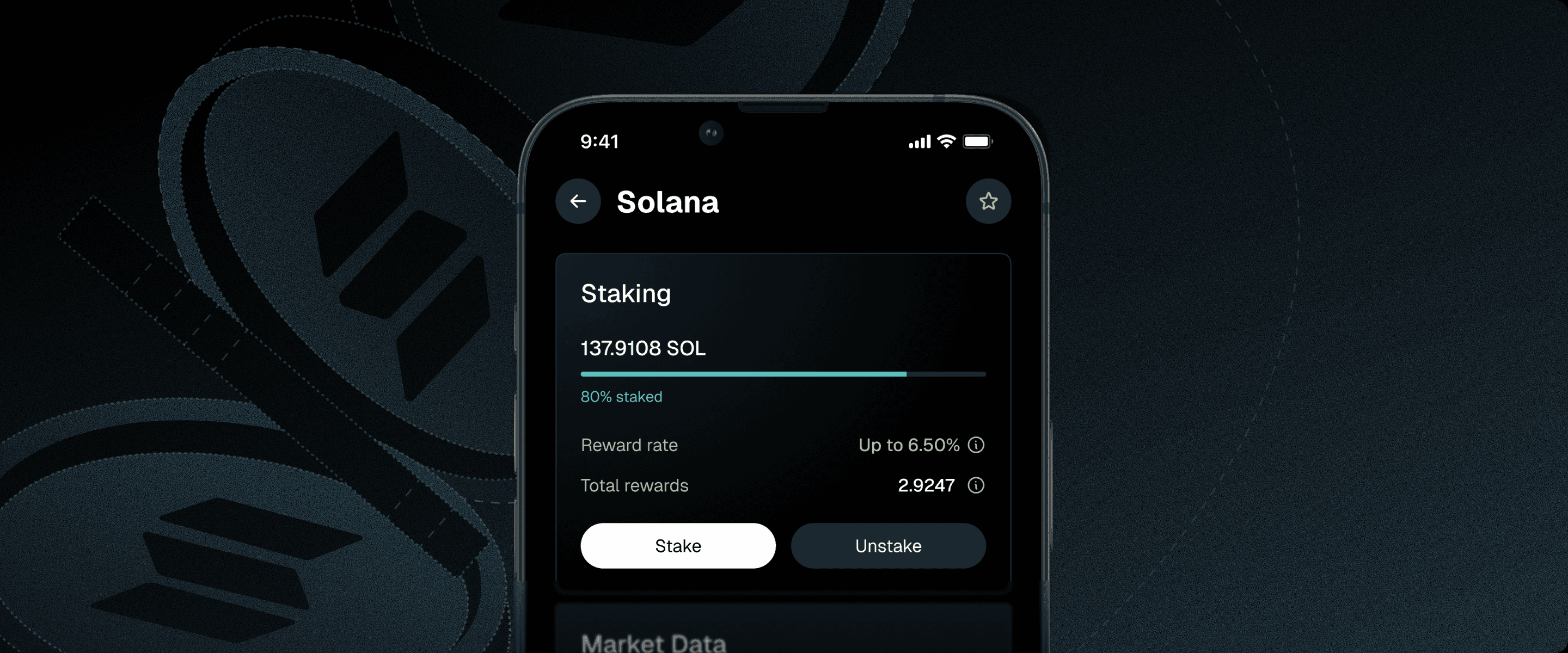
Ultimately, this allows eligible GalaxyOne clients to keep more of the network generated staking rewards, up to an estimated 6.50% in variable rewards on SOL.**
Learn more about GalaxyOne Staking in our Product Announcement.
Get Started with GalaxyOne Staking
If you already hold SOL, or you're considering buying it, staking can be a way to potentially earn rewards while maintaining exposure to the asset. But where you choose to stake your assets matters, and with 0% platform commission on staking rewards through 2026, we invite you to explore GalaxyOne staking.
Please review the disclosures below before staking.
Disclosures
*0% platform commission through December 31, 2026. Platform commission is defined as the fee GalaxyOne charges to access staking on GalaxyOne and applies to Inflation and eligible MEV rewards earned while assets remain actively staked. Validators may retain transaction fees and certain protocol-level rewards associated with block production. Residual MEV rewards that are distributed after your assets are unstaked will not be credited to your account. Network transaction fees for sending and receiving SOL still apply.
**Reward rate is estimated and not guaranteed. Rewards are variable and may increase or decrease. Actual returns depend on network conditions. Past performance is not indicative of future results.
This content is for informational purposes only and is not investment advice or recommendation to buy or sell bitcoin or any security.
More Insights: